
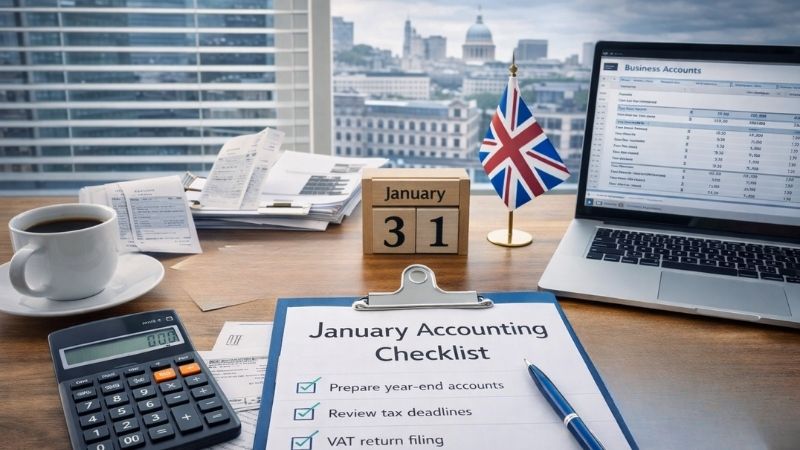
January is more than just a fresh page in the calendar – it’s one of the most important months of the year for small business finances. Starting the year with your accounts in order can save you time, money, and a whole lot of stress later on, especially as the tax year progresses.
For many UK small business owners, January is when things finally slow down enough to review the numbers properly. It’s the perfect opportunity to reset your bookkeeping, fix small issues before they become big problems, and make sure you’re fully compliant with HMRC from day one. A bit of organisation now can prevent last-minute scrambles, missed deadlines, and unexpected tax bills down the line.
Whether you’re a sole trader, limited company director, or growing SME, using a simple January accounting checklist helps ensure nothing important slips through the cracks. It also gives your accountant cleaner, clearer records – which usually means better advice and more opportunities to reduce your tax bill legally.
Below is a practical checklist to help UK small businesses start the year on the right financial footing.
- Review and update your bookkeeping records
- Reconcile bank accounts and business credit cards
- Chase outstanding invoices and review cash flow
- Organise receipts and expense records
- Check upcoming tax deadlines for the year ahead
- Review VAT returns and schemes (if registered)
- Confirm payroll details and PAYE submissions
- Review profits and set financial goals for the year
- Book a catch-up call with your accountant
Review and Update Your Bookkeeping Records
 January is the ideal time to make sure your bookkeeping is fully up to date. Any missing invoices, uncategorised expenses, or incorrectly logged transactions can snowball into bigger issues later in the year. Tidying this up now gives you a clean slate and ensures your figures are accurate from the very start of the tax year.
If you’re using accounting software, make sure all transactions from the previous months are correctly allocated, and nothing is sitting in suspense. If bookkeeping has slipped during a busy period, this is the moment to get back on track.
Reconcile Bank Accounts and Business Credit Cards
Reconciling your bank and credit card accounts means matching your accounting records to your actual bank statements. It’s one of the simplest ways to spot errors, duplicate entries, or missing transactions early.
Doing this in January helps confirm your opening balances for the year are correct. It also reduces the risk of surprises later – especially when it comes to VAT returns, management accounts, or year-end figures.
Chase Outstanding Invoices and Review Cash Flow
 Unpaid invoices can quietly damage cash flow, particularly at the start of the year when expenses often increase. January is a good time to review who owes you money and put a clear plan in place for chasing outstanding payments.
Alongside this, take a step back and assess your cash flow. Understanding what’s coming in and going out over the next few months helps you make better decisions around spending, staffing, and tax planning.
Organise Receipts and Expense Records
Lost receipts often mean lost tax relief. January is a great time to gather digital and paper receipts, organise expense records, and ensure everything is properly logged.
This is especially important for expenses like travel, equipment, subscriptions, and home office costs. Clear records make it easier for your accountant to claim allowable expenses and reduce your tax bill – all without guesswork.
Check Upcoming Tax Deadlines for the Year Ahead
 Every business has multiple deadlines throughout the year, and missing one can result in penalties or interest. January is the perfect moment to map out key dates such as VAT returns, payroll submissions, corporation tax payments, and Self Assessment deadlines.
Having these deadlines clearly diarised (or handled by your accountant) helps avoid last-minute panic and keeps everything running smoothly with HMRC.
Review VAT Returns and VAT Schemes (If Registered)
If your business is VAT registered, January is a good time to review your VAT position. Check that recent returns have been submitted correctly and that your records support the figures reported.
It’s also worth reviewing whether your current VAT scheme is still the most suitable for your business. Changes in turnover or business structure can mean a different scheme could improve cash flow or reduce admin.
Confirm Payroll Details and PAYE Submissions
 Payroll errors can be costly and frustrating to fix later. January is a sensible time to check employee details, salaries, benefits, and PAYE submissions to ensure everything is accurate.
If you’re a director, this is also a good opportunity to review how you’re paying yourself and whether your salary and dividend mix is still tax-efficient for the year ahead.
Review Profits and Set Financial Goals for the Year
Looking at last year’s figures helps you understand how your business is really performing. Reviewing profits, margins, and costs gives you a clear picture of what worked – and what didn’t.
From there, you can set realistic financial goals for the year ahead, whether that’s increasing profitability, improving cash flow, or preparing for growth. Clear numbers lead to better decisions.
Book a Catch-Up Call With Your Accountant
 Finally, January is an excellent time to speak to your accountant. A short review meeting can uncover tax-saving opportunities, highlight potential risks, and help you plan ahead with confidence.
Rather than only speaking to your accountant when deadlines loom, a January check-in sets the tone for a proactive year – and often saves money in the long run.
Want to Take the Pressure Off January?
If you’d like help getting your accounts organised, reviewing your tax position, or setting up the year properly, speaking to an accountant early can make all the difference. Get in touch with us today to see how we can help this year:
📞 Call us at: 01277 236 246
✉️ Email: info@plan-a.co.uk
🌐 Visit: www.plan-a.co.uk